
Complaints and reports
Complaints that do not fall through the cracks
A reporting portal that captures every complaint or report in full, assigns it to a case handler and lets the person who submitted it track progress. For housing associations, local authorities, healthcare and educational institutions, complaints committees and service providers.
Sound familiar?
Every complaint without an owner becomes a second complaint
Handling a complaint quickly and properly prevents a second one. That only works if it is clear who will pick it up and when.
- The same complaint comes in by email and through Facebook, and two colleagues give different answers.
- A report goes unhandled because everyone thinks someone else has it.
- The statutory deadline is narrowly missed.
- The person who submitted the complaint hears nothing for three weeks and posts it online.
- Reporting on numbers and causes takes an afternoon of manual counting.
The solution
One point of entry, a designated owner and a visible status
The reporting form asks follow-up questions about the subject and severity, assigns the report to the right case handler and monitors the deadline. The person who submitted it follows progress on their own page.
- follow-up questions by subject, with attachments and photos
- assignment by subject, location or team
- deadline monitoring with advance alerts
- status page and messages for the person who submitted the report
- reporting by subject, cause and turnaround time
How the process flows
- ReportThe person submitting the report selects a subject and the form asks targeted follow-up questions.
- RegistrationThe report gets a reference number, an acknowledgement and a deadline.
- AssignmentThe right case handler takes ownership and sees the full context.
- HandlingContact, actions and agreements are recorded in the case file.
- ClosureThe person who submitted the report receives the outcome; the cause and turnaround time are included in the reporting.
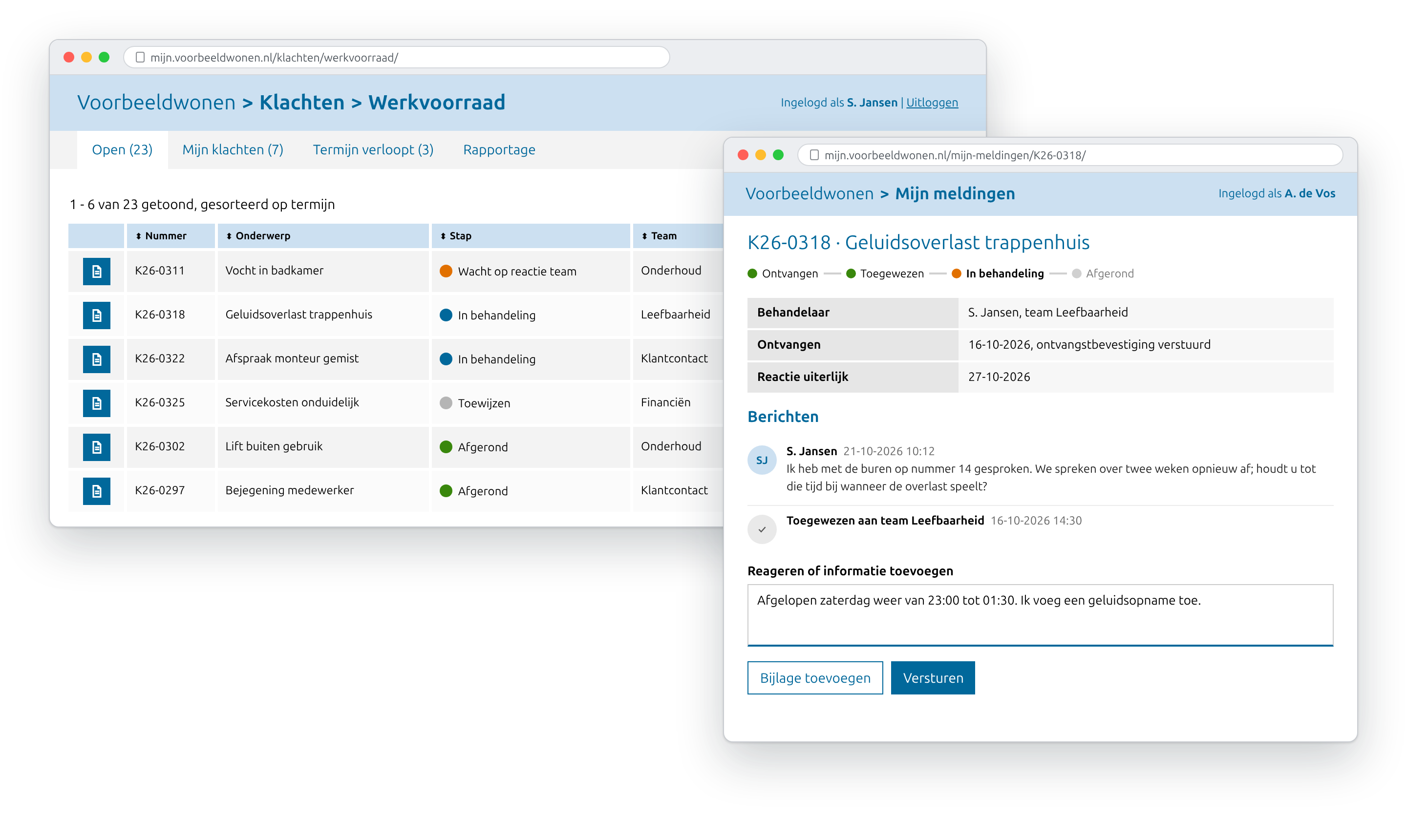
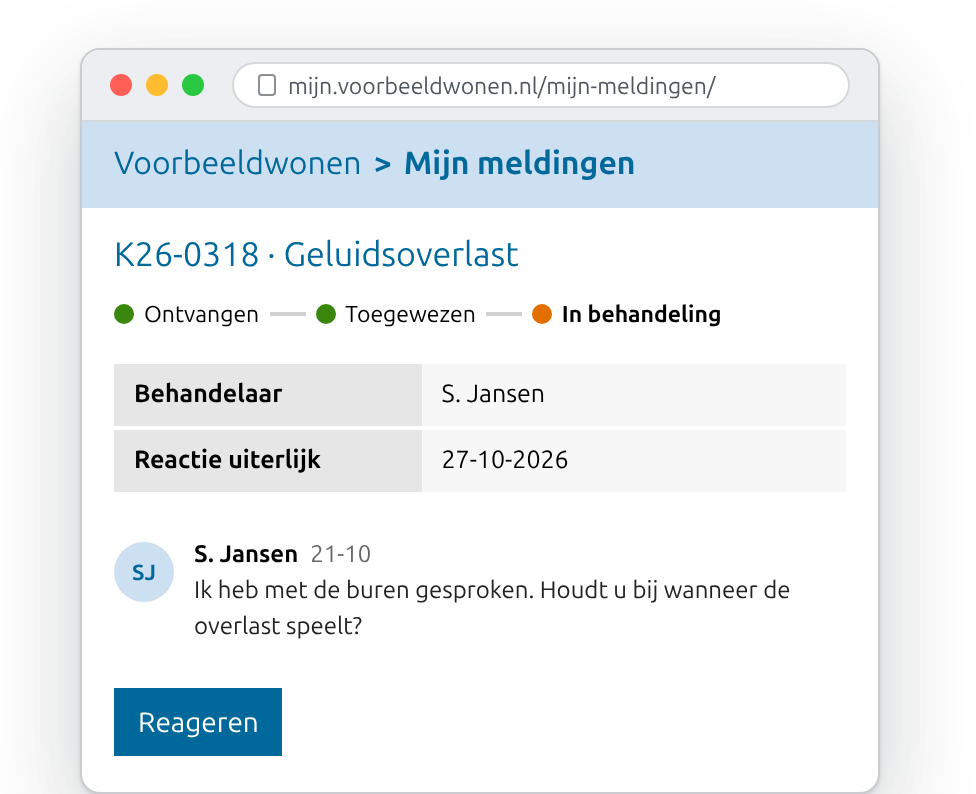
Now
Shared mailbox and callbacks
- reports come in through five channels
- ownership depends on who reads it first
- deadlines are tracked manually
- people do not know what is happening with their complaint
- reports take an afternoon of manual counting
Next
One reporting portal
- every report complete and given a reference number
- a designated owner for every report
- deadlines monitored, with alerts
- people track the status of their own reports
- reporting without manual work
Example workflow
How a complaint will move through the process
Example process
Housing association, 9,000 homes
Complaints about nuisance, maintenance and services currently arrive in the same mailbox. Here is how one complaint moves through the process:
- Monday 19:10 · ReportA tenant reports noise nuisance from the neighbours. The portal asks when it started, at what times it occurs and whether the tenant has already spoken to the neighbours.
- Tuesday 08:30 · AssignmentThe complaint is assigned to the neighbourhood team, with the deadline visible.
- Thursday · HandlingThe housing officer schedules a meeting. The tenant sees who is handling the complaint and what the next step is.
- End of quarter · InsightThe management team sees how many nuisance complaints came in for each housing complex.
Discuss your complaints process
In 30 minutes, we discuss how complaints and reports currently come in, who picks them up and where deadlines are under pressure.
- no detailed plan needed
- you share your process and bottleneck
- together we decide on a suitable next step


You will speak to Jurriaan Koops or René Serier, the partners at Aiwos.
After submitting
- A personal response within one working day
- A 30-minute conversation at a time that suits you
- A concrete next step, even if we are not the right fit