
Fault and maintenance intake
Fault reports that arrive complete
A fault intake that asks follow-up questions and sends complete reports to the right team. For technical services, facilities management, machine builders and maintenance companies.
Sound familiar?
Every vague report means another trip
The better the report, the more often the engineer can fix the problem in one visit. Right now, the information needed is often missing.
- “The machine isn’t working” is the entire report.
- On site, it turns out nobody provided the model number.
- The service office spends its time chasing everyone by phone.
- The engineer makes a second trip because they brought the wrong part.
- Only the longest-serving engineer knows which faults have occurred before.
The solution
An intake that asks questions like your best service coordinator
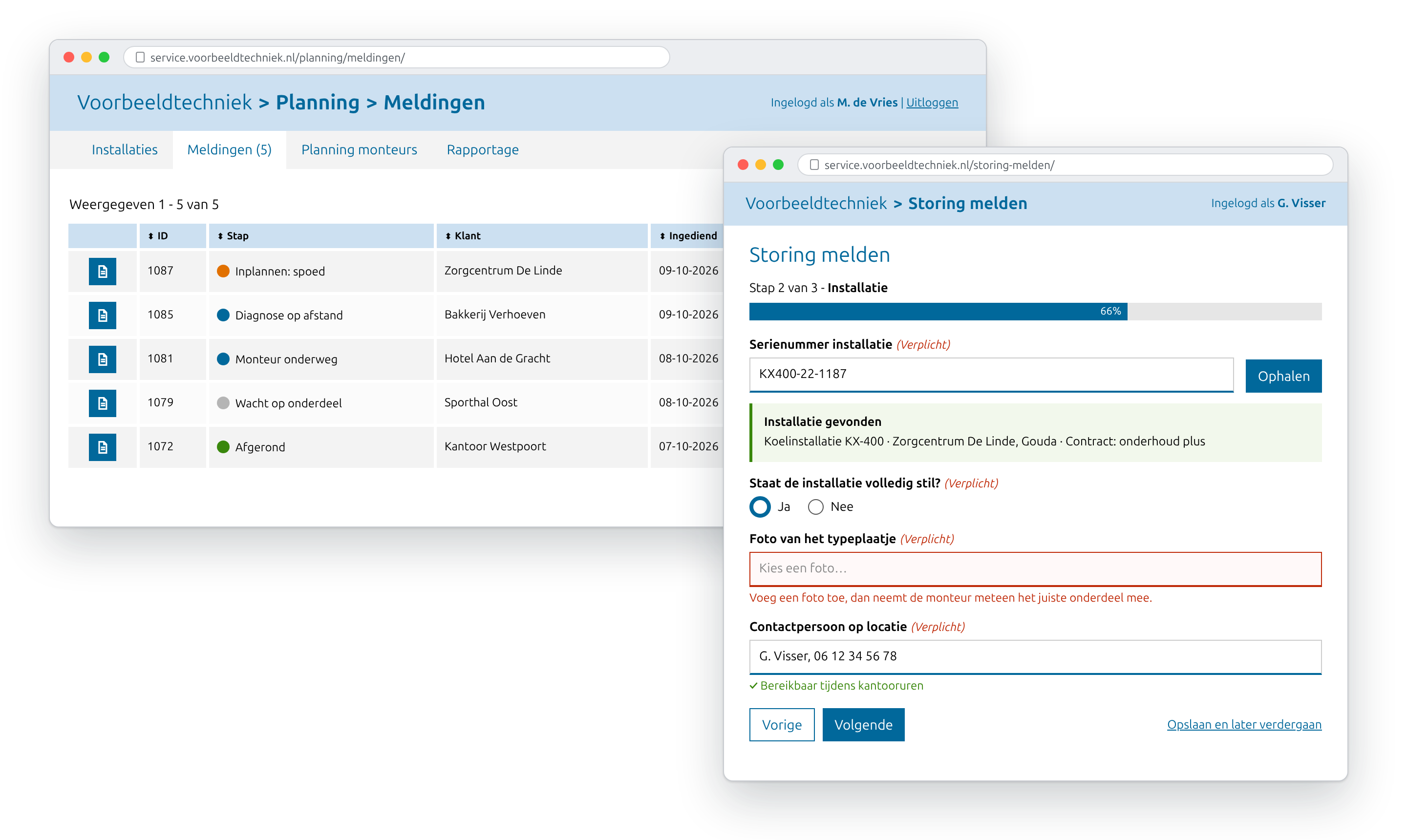
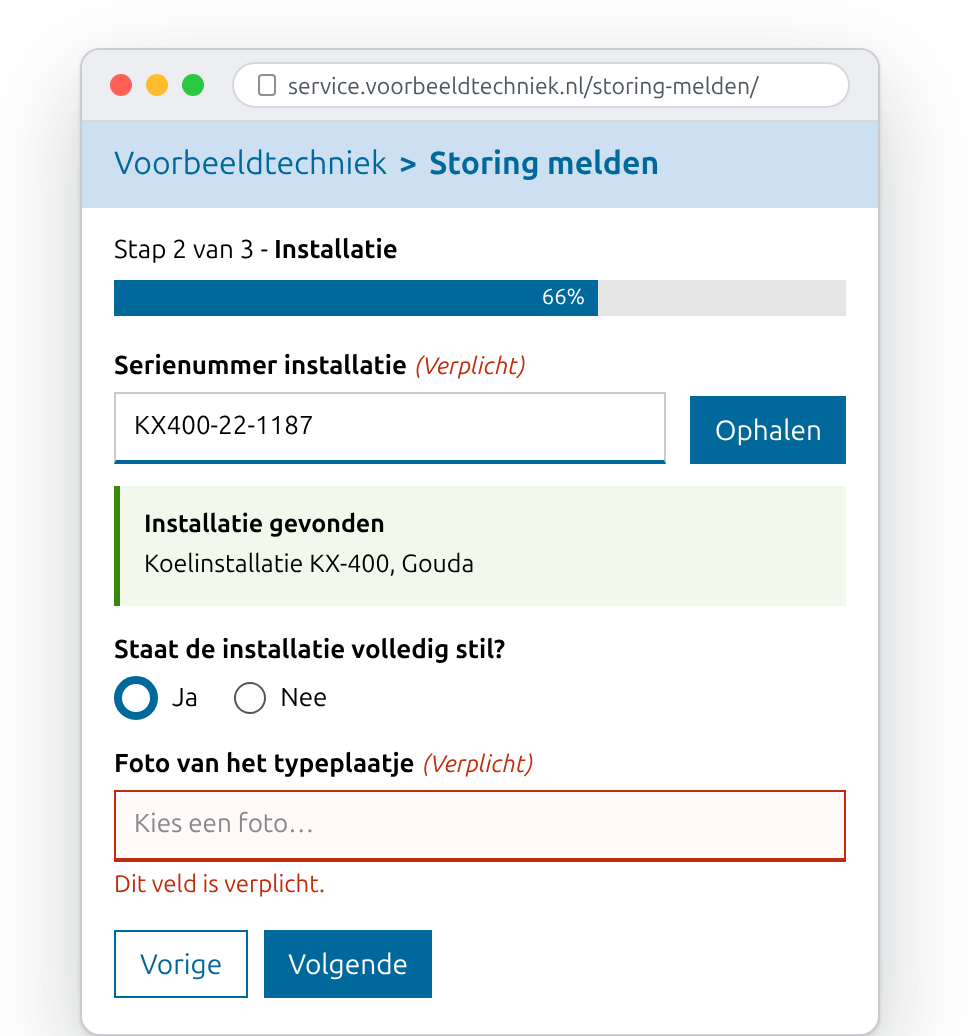
A smart reporting form asks the right follow-up questions based on the installation, location and urgency, then sends the complete report to the right team.
- photos, video and attachments added directly to the report
- automatic routing by urgency and specialism
- integration with your ticketing or maintenance system
- status portal for both the person reporting the fault and the service office
- fault history for each asset or installation
How the process flows
- ReportThe form asks follow-up questions about the installation, location and urgency.
- ValidationAsset details and contract information are added automatically.
- RoutingThe report goes straight to the right team with the right priority.
- Follow-upThe engineer sees all the context; the person who reported the fault tracks the status online.
- ReportingHistory and turnaround times for each asset, without manual work.
Now
Phone, email and follow-up calls
- reports arrive with vague details
- the engineer drives back for a part that could have been identified in the report
- the person who reported the fault calls the service office for an update
- urgent and non-urgent reports sit in the same queue
- fault history is in people’s heads, not in systems
Next
One smart fault intake
- every report arrives complete, with a photo
- the report goes straight into your ticketing system
- the person who reported the fault and the service office see the same status
- history for each asset, without searching
- the engineer sets off with the right parts
Example flow
How a fault report will flow
Example process
Maintenance company, 40 engineers
Reports currently come in by phone and through a general email address, leaving the service office to guess the rest. Here is how one report works with a smart intake:
- 07:40 · ReportThe supermarket manager selects the branch and cold room 2. The form asks for the temperature and whether the alarm is sounding.
- 07:42 · PhotoA photo of the display is required for a mechanical fault. The report cannot be submitted without a photo.
- 07:42 · PriorityA refrigeration failure with a risk of stock loss is automatically marked as urgent.
- 07:45 · SchedulingThe complete report is in the existing ticketing system. The engineer on duty sees the photo and installation details.
- 08:30 · StatusThe supermarket manager follows a link to see that the engineer is on the way. No call to the service office is needed.
Discuss your fault intake
In 30 minutes, we discuss how reports currently come in, what is often missing and how to get them to the right team with all the details.
- no detailed plan needed
- you share your process and bottleneck
- together we decide on a suitable next step


You will speak to Jurriaan Koops or René Serier, the partners at Aiwos.
After submitting
- A personal response within one working day
- A 30-minute conversation at a time that suits you
- A concrete next step, even if we are not the right fit